
 admin
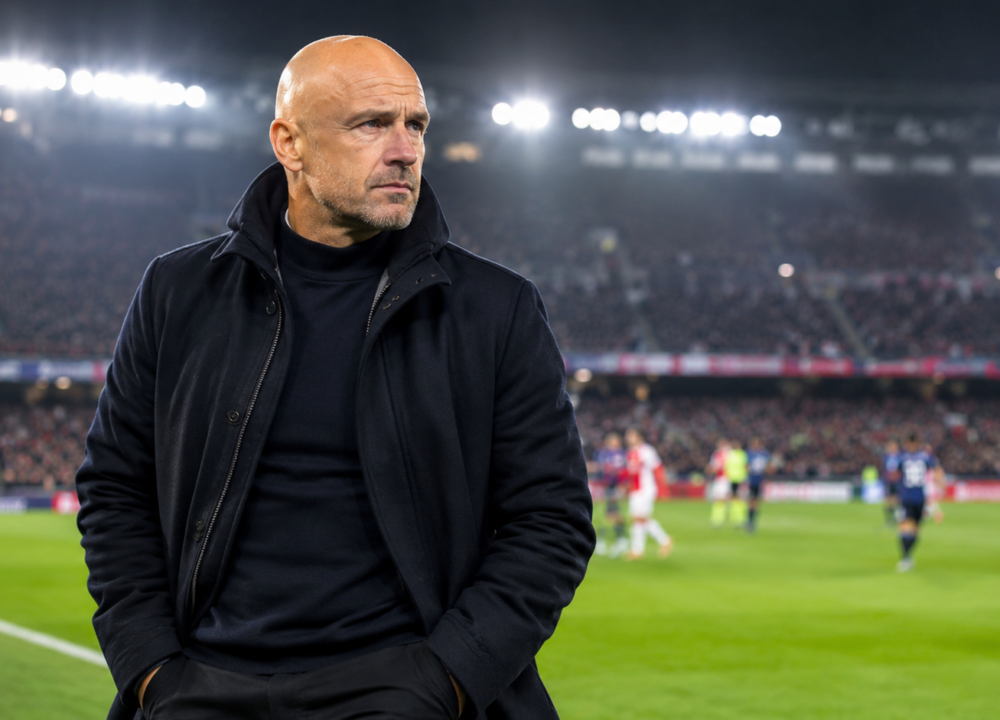
Football management can change a career’s direction in a matter of months. One season, a coach might be celebrating a league title; the next, he could be facing questions about results, tactics and the future of his team. Few modern coaching journeys illustrate these contrasting experiences quite as clearly as that of Alfred Schreuder.
The Dutch football manager has worked alongside some of the game’s most recognisable coaching figures, including Erik ten Hag, Ronald Koeman and Julian Nagelsmann. His career has taken him from the Netherlands to Germany, Spain, Belgium and the Middle East, giving him experience of different football cultures and competing expectations.
Now, Alfred Schreuder is returning to club management in Turkey. Kasımpaşa confirmed his appointment on 4 November 2026, agreeing a deal that runs until the end of the current season. The move gives the 54-year-old another opportunity to demonstrate his ability to organise a team, improve performances and turn his tactical ideas into results.
Kasımpaşa Sportif Faaliyetler A.Ş.+1
But who is Schreuder, what has he achieved, and why does his managerial career continue to attract attention?
Who is Alfred Schreuder?
Alfred Schreuder is a Dutch football coach and former professional midfielder born on 2 November 1972 in Barneveld, the Netherlands. He built his reputation through a combination of playing experience, assistant coaching positions and spells as a head coach at clubs competing in several European leagues.
Unlike managers who become famous through a single long-term appointment, Schreuder’s career has been shaped by movement between different roles. He has worked as an assistant to established managers, taken responsibility for teams of his own and experienced both championship success and difficult departures.
That variety matters. An assistant coach may concentrate on training, opposition analysis and tactical preparation, while a head coach must also handle selection decisions, results, public scrutiny and relationships with club executives.
Schreuder has experienced both sides of the job, making his career particularly interesting to followers of European football.
Alfred Schreuder’s playing career and coaching beginnings
Before becoming a manager, Schreuder played professional football as a midfielder. His playing career included Feyenoord, RKC Waalwijk, NAC Breda, FC Twente and Vitesse, among other spells. He eventually moved into coaching, building his experience within Dutch football.
Wikipedia+1
His time at FC Twente proved particularly important in shaping his coaching career. He worked as an assistant before taking on greater responsibility, including a spell as caretaker manager in 2013.
These early years gave Schreuder an understanding of the practical demands of professional football: preparing players for matches, developing tactical systems and balancing the expectations of supporters with the realities of competition.
He became FC Twente’s head coach in 2014. The appointment represented a significant step, moving him from the supporting staff into the most visible position on the touchline.
The experience was not without difficulties, but it established the foundation for subsequent roles in Germany and at some of Europe’s best-known clubs.
Alfred Schreuder at Hoffenheim: Working with Julian Nagelsmann
One of the most influential chapters in Schreuder’s development came at German club TSG Hoffenheim.
He initially worked as an assistant coach under Julian Nagelsmann, who became widely recognised for his modern tactical approach and attention to positional play. Their working relationship later led to Schreuder taking charge of Hoffenheim for the 2019–20 season.
Bundesliga+1
The Bundesliga offered a demanding environment in which tactical preparation, pressing structures and transitions between defence and attack were central to weekly competition.
Working alongside Nagelsmann also gave Schreuder experience of a coaching culture built around detailed analysis and carefully organised training sessions. The two men would later work together again at international level.
Schreuder’s spell as Hoffenheim’s head coach ended in June 2020, before the conclusion of the broader journey that would eventually take him to Barcelona.
Although his tenure was relatively short, the experience became an important part of his professional identity.
Barcelona and Ajax: Learning from leading coaches
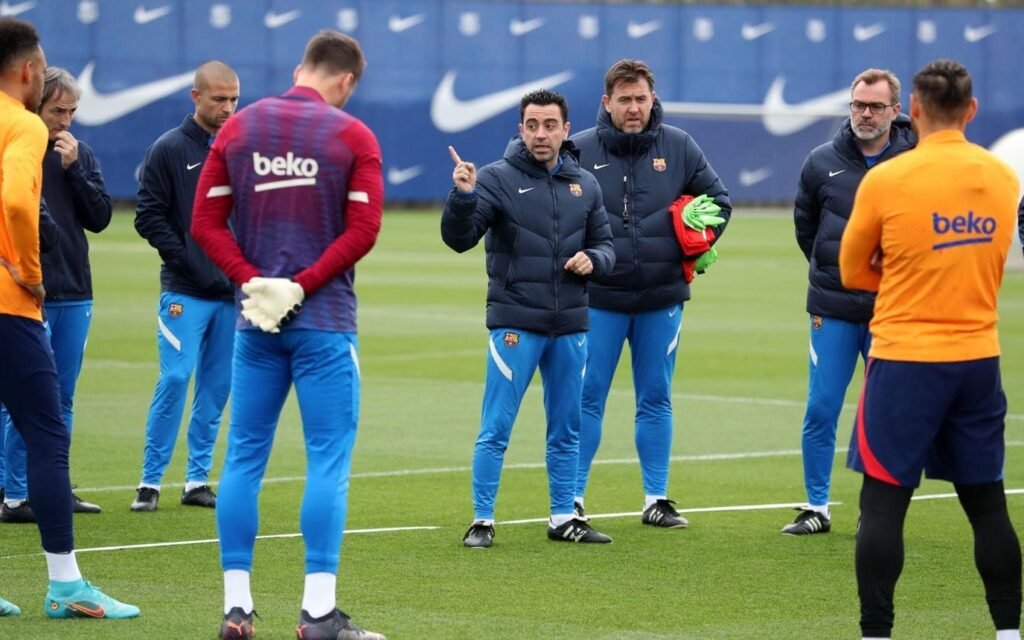
Schreuder joined Ronald Koeman’s coaching staff at Barcelona in 2020. The appointment brought him into one of the most closely scrutinised football environments in the world, where tactical decisions and results attract international attention.
Barcelona won the 2020–21 Copa del Rey during Koeman’s tenure, giving Schreuder experience of working within a trophy-winning staff at a major European club.
Bundesliga+1
The role also offered exposure to the demands of coaching elite players, preparing for high-profile fixtures and operating under intense media scrutiny.
Schreuder subsequently returned to Ajax as an assistant to Erik ten Hag. He was part of the coaching staff during Ajax’s successful 2018–19 campaign, when the club won the Eredivisie and KNVB Cup.
Transfermarkt+1
These experiences helped establish Schreuder’s reputation as a coach comfortable working within technically ambitious teams.
However, there is an important distinction between contributing to a successful coaching staff and leading a club independently. At Barcelona and Ajax, he worked within a wider management structure. His later appointments would test his ability to carry the full responsibility himself.
Club Brugge: The championship that strengthened his reputation
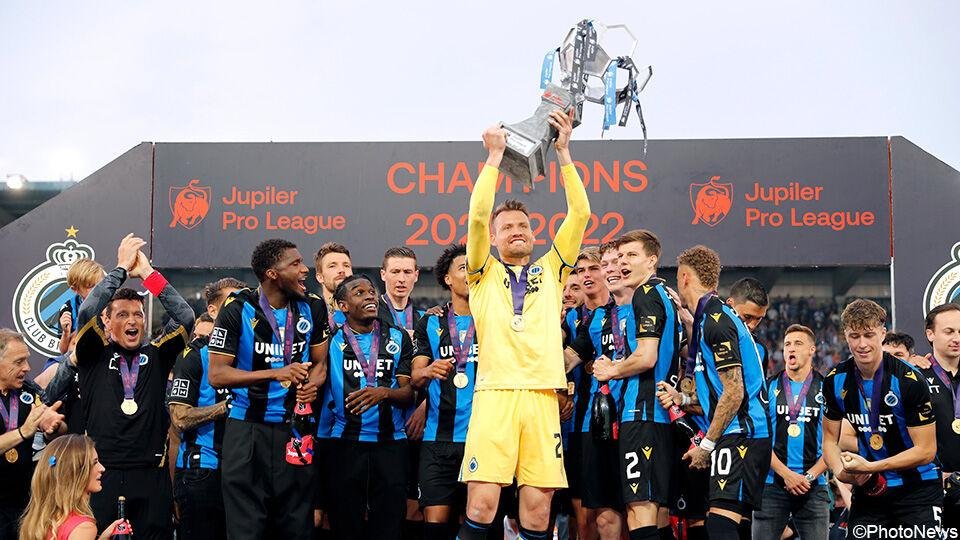
Schreuder’s spell at Club Brugge in Belgium was one of the clearest successes of his managerial career.
Appointed in January 2022, he inherited a club competing for domestic honours and seeking to maintain its position among Belgium’s leading sides. He helped guide the team to the Belgian Pro League title in the 2021–22 season.
Bundesliga+1
Winning a league championship is an important measure of a manager’s effectiveness because it demands consistency rather than a single impressive result. Teams must manage injuries, rotate players, adapt to opponents and keep collecting points over an extended campaign.
For Schreuder, the title demonstrated that he could take responsibility for a team and deliver a major domestic honour.
It also strengthened his credentials ahead of his return to the Netherlands, where he would take charge of Ajax.
The achievement remains a significant reference point when assessing his career. It shows that his record cannot be understood solely through the more difficult appointments that followed.
Alfred Schreuder at Ajax: Why did his tenure end?
Ajax appointed Schreuder as head coach in 2022 following Ten Hag’s departure to Manchester United. Expectations were naturally high: Ajax are one of the Netherlands’ most successful clubs and are accustomed to competing for domestic titles while developing talented players.
However, the appointment proved far more difficult than his championship-winning spell in Belgium.
Schreuder’s time in charge ended on 26 January 2023, after a disappointing run of results. He had overseen 26 matches as Ajax manager, according to Transfermarkt’s managerial record.
Transfermarkt+1
The departure highlighted the difference between being part of a successful coaching team and managing a major club under sustained pressure.
At Ajax, results are only one part of the challenge. Supporters expect attacking football, strong performances in the Eredivisie and a clear identity that reflects the club’s traditions.
When those expectations are not met, pressure can build quickly.
It would be simplistic to attribute a managerial departure to a single tactical decision or match. Football clubs are complex organisations, and results can be influenced by recruitment, squad balance, injuries and wider sporting decisions. What is clear is that Schreuder’s Ajax tenure did not last long enough to establish the sustained success that the club expected.
For observers, the episode became a defining contrast with his title-winning campaign at Club Brugge.
From the Middle East to the Germany national team
Following his Ajax departure, Schreuder continued his managerial career in the Middle East, taking charge of Al-Ain in the United Arab Emirates and later Al-Nasr. He subsequently managed Saudi Arabian side Al-Diraiyah, where his tenure ended in May 2026.
RTL.nl+1
These appointments broadened his experience beyond European football, exposing him to different leagues, squads and competitive circumstances.
In March 2026, the German Football Association announced that Schreuder would join Julian Nagelsmann’s coaching staff for the 2026 FIFA World Cup. The appointment reunited the pair after their earlier work at Hoffenheim.
dfb.de+1
The role placed Schreuder within an international coaching operation preparing for a major tournament. It also reflected the value Nagelsmann placed on their existing professional relationship.
International coaching differs from club management. Coaches have less time with players, work around national-team selection and must prepare for opponents within short training camps. The experience adds another dimension to Schreuder’s career, although it should not be confused with holding the position of Germany’s head coach.
Alfred Schreuder’s latest role: What Kasımpaşa can expect
The latest chapter began when Turkish club Kasımpaşa announced Schreuder as its new head coach on 4 November 2026. His contract runs until the end of the season, following Emre Belözoğlu’s departure.
Kasımpaşa Sportif Faaliyetler A.Ş.+1
The appointment brings Schreuder back into day-to-day club management after his work with Germany’s national-team staff.
For Kasımpaşa, the immediate priority will be turning the new appointment into better performances and consistent results. The Turkish Süper Lig is a competitive environment in which managers must adapt to different playing styles, maintain squad confidence and respond quickly when results fall short.
Schreuder’s previous championship success at Club Brugge offers encouragement, while his experiences at Ajax and Al-Ain underline the uncertainty that comes with high-pressure appointments.
There are reasons to watch this move closely, but expectations should remain measured. A manager’s past achievements cannot guarantee future success, particularly when the squad, resources and circumstances differ from those of previous clubs.
The most useful early indicators will be how Kasımpaşa organise themselves without the ball, whether their attacking play becomes more effective and how quickly the players adapt to Schreuder’s ideas.
Those details will tell supporters more than the appointment itself.
What is Alfred Schreuder’s coaching philosophy?
Schreuder’s career alongside coaches such as Nagelsmann, Koeman and Ten Hag suggests extensive exposure to possession-based football, pressing and structured positional play.
However, it is important not to assume that every manager who has worked within these systems follows an identical philosophy.
Effective coaching depends on the players available, the opponent, the match situation and the club’s broader objectives. A team competing for a league title may approach a fixture differently from one trying to protect a narrow lead or rebuild confidence after several defeats.
Schreuder’s experience across different leagues gives him a range of tactical reference points. His challenge at Kasımpaşa will be to turn those ideas into a practical approach that suits his squad.
For supporters, the key questions are straightforward: Can he make the team more organised? Can he improve their consistency? And can he establish a style that produces results without sacrificing the team’s attacking threat?
Those questions will be answered on the pitch rather than through reputation alone.
Conclusion: What comes next for Alfred Schreuder?
Alfred Schreuder’s career is a story of contrasting outcomes, from winning the Belgian league with Club Brugge to experiencing a difficult departure from Ajax. His work at Barcelona, his coaching partnership with Nagelsmann and his subsequent appointments in the Middle East have added breadth to his professional experience.
Now, his move to Kasımpaşa presents another opportunity to establish himself as a successful head coach.
The championship in Belgium demonstrates what Schreuder can achieve in the right circumstances. His more challenging spells show why sustained success in football is rarely straightforward.
For readers following Alfred Schreuder, the most important development is no longer what happened at Ajax or Barcelona, but what he can accomplish next in Turkey. His new role will provide the next meaningful test of his managerial ability.
Ultimately, his legacy will depend not on the number of famous clubs on his CV, but on how consistently he can turn coaching knowledge into results.
Frequently asked questions about Alfred Schreuder
1. Who is Alfred Schreuder?
Alfred Schreuder is a Dutch football manager and former professional midfielder. He has managed clubs including Ajax, Club Brugge, Hoffenheim and FC Twente, and has worked as an assistant coach at Barcelona and Ajax.
2. Which club does Alfred Schreuder manage in November 2026?
Kasımpaşa appointed Schreuder as head coach on 4 November 2026. His agreement runs until the end of the season, according to the Turkish club’s official announcement.
3. Why did Alfred Schreuder leave Ajax?
Ajax dismissed Schreuder in January 2023 following a disappointing run of results. His tenure had lasted approximately six months, and the team had struggled to meet expectations.
4. Did Alfred Schreuder win a trophy with Club Brugge?
Yes. Schreuder led Club Brugge to the Belgian Pro League title in the 2021–22 season. It remains one of the most significant achievements of his head-coaching career.
5. Did Alfred Schreuder work at Barcelona?
Yes. He served as an assistant coach under Ronald Koeman at Barcelona. The team won the Copa del Rey during the 2020–21 season.
6. Did Alfred Schreuder coach Germany at the 2026 World Cup?
Schreuder joined Julian Nagelsmann’s Germany coaching staff in March 2026 for the World Cup period. His role was as an assistant, not the national team’s head coach.