
 admin
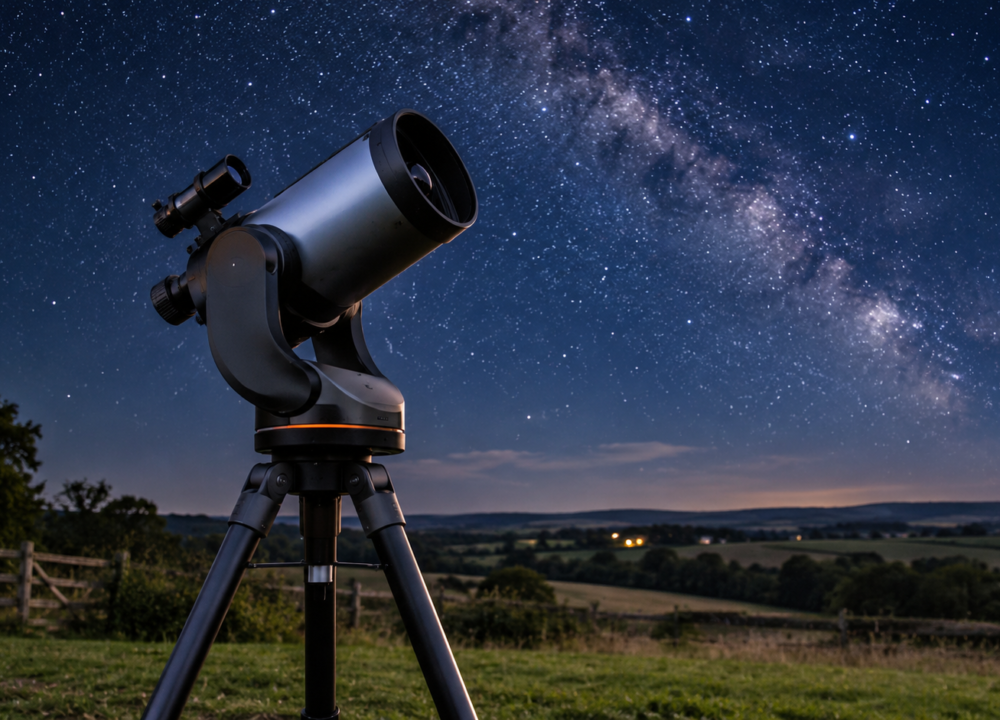
The night sky is full of extraordinary sights, from the rings of Saturn to distant galaxies that have travelled across space for millions of years before their light reaches Earth. Yet seeing these objects clearly has traditionally required patience, technical knowledge and the right equipment. The Unistellar telescope aims to make that experience more accessible by combining optical astronomy with digital imaging, automated tracking and smartphone controls.
Instead of spending an evening manually locating celestial objects and adjusting equipment, users can select targets through an app and let a computer-assisted telescope do much of the work. The result is a different approach to stargazing, one that brings aspects of modern astrophotography into a more accessible package.
But how does the technology work, which models are worth considering, and is a Unistellar smart telescope a sensible investment for someone in the UK? Here is what prospective buyers need to know.
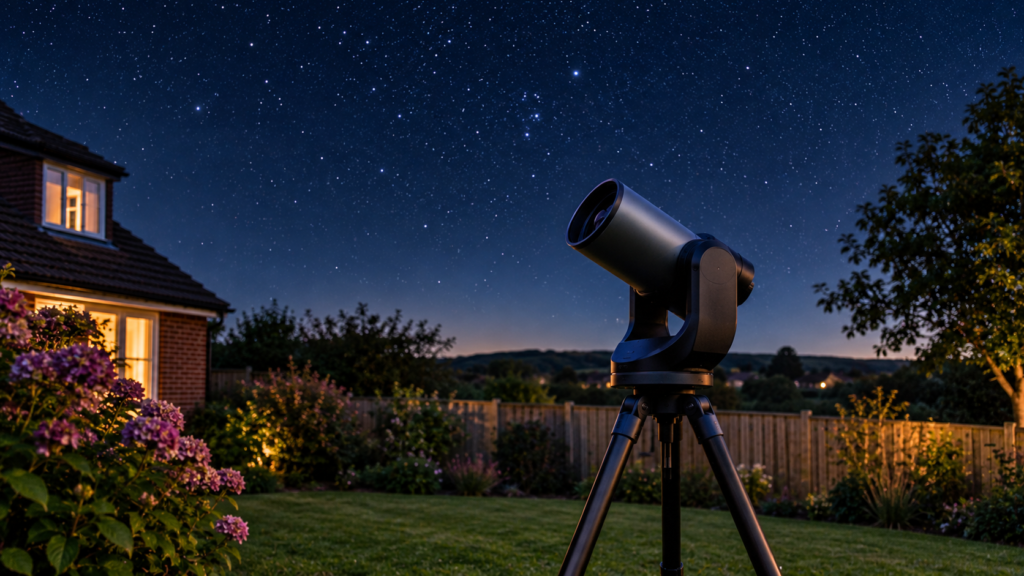
What Is a Unistellar Telescope?
Unistellar is a company specialising in smart telescopes designed to help people observe and photograph astronomical objects with the assistance of digital technology.
Unlike a conventional telescope that relies primarily on a direct optical view through an eyepiece, many Unistellar models use an electronic imaging sensor to capture light. Their onboard computers process and combine image data, helping reveal details that may be difficult to see with the naked eye.
The telescope can also locate and track selected objects automatically. Users control the system through a compatible smartphone or tablet, making it easier to explore the sky without mastering every technical aspect of traditional telescope operation.
The company’s current model families include the Odyssey range and the Expert range, which features the eQuinox 2 and eVscope 2. Their specifications and capabilities differ, so choosing between them requires more than simply comparing prices.
How Does a Unistellar Smart Telescope Work?
The technology combines several functions that would otherwise require separate steps during an observing session.
Automated object finding
Traditional telescopes often require users to align the equipment and locate objects manually. Unistellar’s Smart Star Finder system uses location information, star-field recognition and an astronomical database to help the telescope determine where it is pointing.
Users select an object through the app, and the motorised mount moves the telescope towards the target. It can then track the object as Earth’s rotation changes its position in the sky.
This can make the hobby less intimidating for beginners who would rather start exploring than spend their first evening learning how to navigate between stars.
Digital image enhancement
A key feature is Enhanced Vision Technology, which processes incoming light to improve the visibility of astronomical objects. The system can combine multiple exposures, allowing faint details to become more apparent than they might in a single short exposure.
This is particularly useful when observing deep-sky objects, such as nebulae, star clusters and galaxies.
The experience is different from looking through a purely optical telescope. Rather than relying exclusively on the light reaching your eye, the observer sees a digitally processed representation of the captured image.
Smartphone control and image storage
The companion app provides access to the telescope’s controls and object catalogue. Depending on the model, users can save images, share observations and explore information about the objects they discover.
This combination makes the system appealing to people who enjoy both astronomy and digital photography.
Unistellar Telescope Models Compared
Unistellar offers different options for people who prioritise portability, straightforward operation or a more traditional observing experience.
The following comparison uses the manufacturer’s published specifications. Availability, software and pricing should be checked before purchasing.
| Model | Mirror diameter | Focal length | Key distinction |
| Unistellar Odyssey | 85 mm | 320 mm | Compact design and automated focusing |
| Unistellar Odyssey Pro | 85 mm | 320 mm | Adds an electronic eyepiece developed with Nikon |
| Unistellar eQuinox 2 | 114 mm | 450 mm | Larger optics and screen-based observing |
| Unistellar eVscope 2 | 114 mm | 450 mm | Larger optics with a Nikon electronic eyepiece |
Source: Unistellar’s published model comparison.
Unistellar Odyssey
The Odyssey is designed for straightforward, relatively portable observing. It features an 85 mm mirror, automated focusing and a compact body that is easier to transport than the larger Expert models.
Its design is attractive to newcomers who want automated operation without having to learn mirror alignment or manually adjust focus.
Unistellar Odyssey Pro
The Odyssey Pro shares the main optical specifications of the standard Odyssey but adds an electronic eyepiece incorporating Nikon technology.
That distinction matters for people who prefer a more direct viewing experience rather than looking exclusively at a phone or tablet screen.
The eyepiece is an electronic viewing system, not the same as a conventional optical eyepiece on a traditional telescope.
Unistellar eQuinox 2
The eQuinox 2 uses a larger 114 mm mirror and a 450 mm focal length. Its design places greater emphasis on electronically enhanced observing, including deep-sky targets such as galaxies and nebulae.
It is worth considering for enthusiasts who want to explore faint astronomical objects while retaining automated object finding and tracking.
Unistellar eVscope 2
The eVscope 2 combines the larger optics of the Expert range with an electronic eyepiece developed with Nikon.
For buyers who want both app-based operation and an eyepiece-style experience, that combination may be appealing. However, it is larger than the Odyssey models and requires more attention to manual focus and collimation.
No model is automatically the best choice for everyone. Portability, preferred viewing style, target objects and budget should all influence the decision.
Can You Use a Unistellar Telescope in the UK?
Yes. A smart telescope can be useful in the UK, although local conditions will influence what you can see.
The country offers a mixture of urban observing locations, suburban gardens and darker rural skies. A telescope’s digital processing can help with some of the challenges caused by artificial lighting, but it cannot eliminate every disadvantage of observing from a bright location.
Stargazing from towns and cities
Streetlights and illuminated buildings increase background brightness, making faint celestial objects harder to observe. Unistellar’s Deep Dark Technology is designed to reduce the effects of light pollution and image noise.
However, the company acknowledges that brighter surroundings still limit the visibility of some faint objects. Moving away from direct lighting and choosing a location with a clear view of the sky can improve results.
A garden, a suitably dark rooftop or a rural observing site may offer better conditions than a brightly illuminated balcony.
Weather and seasonal conditions
British astronomy requires flexibility. Cloud cover, rain, atmospheric turbulence and short winter days can all affect observing opportunities.
Even an advanced telescope cannot see through thick cloud. A clear forecast, a stable surface and time to allow the equipment to operate under suitable conditions are important.
For the best experience, check local cloud forecasts and plan around visible targets rather than expecting every evening to produce excellent results.
What Can You See Through a Unistellar Telescope?
The range of possible observations depends on the model, observing conditions and the target itself.
Galaxies and nebulae
Deep-sky objects are among the main attractions of electronically enhanced telescopes. Galaxies, nebulae and star clusters can reveal structure and colour through image processing that may not be apparent during a brief visual observation.

Objects such as the Orion Nebula and the Whirlpool Galaxy are useful examples of targets that astronomy enthusiasts often explore.
Results will vary with aperture, exposure, sky brightness and atmospheric conditions. Promotional images should not be treated as a guarantee of what every user will see.
The Moon and planets
The Moon is a rewarding target because its craters, mountains and shadows provide plenty of detail. Planets can also be observed, although their apparent size and the telescope’s optical design affect the experience.
Unistellar’s Odyssey models are marketed as particularly versatile for planetary and lunar observation. The larger Expert models also support planetary observing, but the manufacturer’s comparison rates their planetary performance differently.
If detailed planetary imaging is your main priority, compare the specific model carefully with telescopes designed primarily for high-magnification planetary observation.
Asteroids and scientific observing
Unistellar also promotes citizen-science participation, enabling users to contribute observations to organised astronomical research campaigns.
Depending on the programme, observations may support work involving asteroids, exoplanet transits and other scientific targets. Participation is not a guarantee of making a discovery, but it can provide a meaningful educational dimension beyond recreational stargazing.
Advantages and Limitations of a Unistellar Telescope
A fair buying decision means considering both the strengths and the compromises.
Potential advantages
- Automated object finding and tracking reduce the learning curve.
- Digital image processing can improve the visibility of faint deep-sky objects.
- Smartphone controls provide a convenient way to explore the night sky.
- Some models are compact enough for easier transport.
- Image capture and citizen-science programmes add opportunities for learning and sharing.
Potential limitations
- Smart telescopes generally cost more than basic beginner telescopes.
- Digital processing changes the observing experience compared with a purely optical instrument.
- Cloud, atmospheric conditions and light pollution still affect results.
- Some models require manual focusing and mirror alignment.
- The best choice for galaxies may not be the best choice for detailed planetary imaging.
Another consideration is long-term usability. Buyers should check app compatibility, warranty coverage, software support and the availability of replacement accessories before committing to a premium instrument.
Is a Unistellar Telescope Worth Buying?
For someone who wants to explore galaxies and nebulae without mastering every aspect of traditional telescope operation, a Unistellar telescope can be an appealing option.
Its combination of automated navigation, image processing and digital controls makes astronomy more approachable. It may also suit families, educators and photography enthusiasts who want a guided way to explore the night sky.
However, it is not necessarily the right purchase for every beginner. Someone who enjoys learning the mechanics of astronomy, prefers direct optical observation or has a limited budget may find a conventional telescope more satisfying.
Before buying, consider these questions:
- Do you mainly want to observe galaxies, nebulae, planets or the Moon?
- Would you prefer a phone screen, an electronic eyepiece or a conventional optical view?
- Will you observe from a city, a garden or darker countryside?
- How much portability do you need?
- Does the price include the accessories and support you expect?
For UK buyers, check the current UK selling price, delivery charges, taxes, returns policy and warranty terms directly with the seller. Prices quoted on international websites may be in US dollars and should not be assumed to represent the final UK cost.
Final Verdict: Should You Choose a Unistellar Telescope?
A Unistellar telescope demonstrates how digital technology is changing amateur astronomy. Automated tracking, electronic imaging and onboard processing can help more people explore celestial objects without the steep initial learning curve associated with some traditional setups.
The Odyssey range is worth considering for portability and simplified operation, while the eQuinox 2 and eVscope 2 offer larger optics for those interested in the Expert range. The eyepiece distinction between the Odyssey and Odyssey Pro, and between the eQuinox 2 and eVscope 2, is another important factor.
Ultimately, the best Unistellar telescope is the one that matches your observing interests, budget and local conditions. Compare the current specifications, understand the limitations of digital viewing and choose according to the experience you actually want—not simply the longest feature list.
Frequently asked questions
1. What is a Unistellar telescope?
A Unistellar telescope is a smart telescope that combines optical components, electronic imaging, automated object tracking and software processing to make astronomical observing more accessible.
2. Is a Unistellar telescope good for beginners?
It can be. Automated object finding and app-based controls reduce some of the technical challenges of starting astronomy. However, the price and differences between models mean beginners should compare their requirements before buying.
3. Can you see galaxies with a Unistellar telescope?
Yes. Unistellar telescopes are designed to observe deep-sky objects, including galaxies, nebulae and star clusters. The visibility of individual objects depends on the model, sky conditions, light pollution and image processing.
4. Can a Unistellar telescope work in a city?
Yes, but results vary. Digital processing can reduce some effects of light pollution, although bright skies still limit the visibility of faint objects. A darker location will generally offer more observing opportunities.
5. What is the difference between Unistellar Odyssey and Odyssey Pro?
Both have an 85 mm mirror and a 320 mm focal length. The Odyssey Pro adds an electronic eyepiece incorporating Nikon technology, while the standard Odyssey is designed primarily for screen-based observing.
6. How much does a Unistellar telescope cost in the UK?
The price depends on the model, seller, availability and included accessories. International prices may be quoted in US dollars, so UK buyers should check the current UK selling price and any applicable delivery charges and taxes before purchasing.